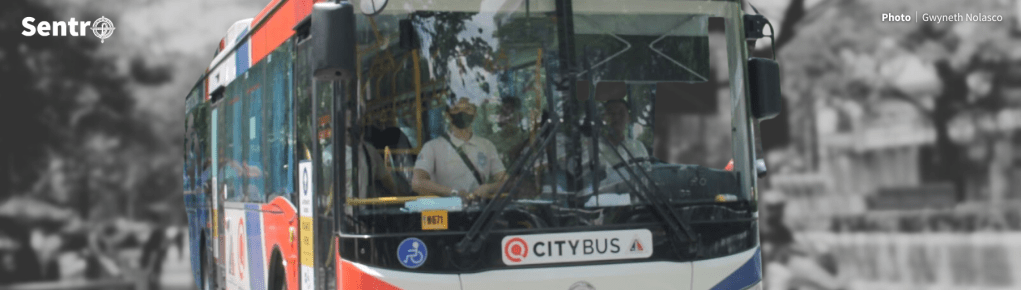
The free bus ride service in Quezon City (QC) has catered to 35 million passengers as of May 2025, according to the QC Traffic and Transport Management Department (TTMD), amid commuters’ experience of delays in bus arrivals and incomplete and missed trips.
Five years since the Q City Bus Augmentation Program began offering free ride services to residents and non-residents of QC, some commuters continue to endure long lines despite the fixed schedule of intervals per route.
For UP Diliman student Sophia Pangandian, there are instances when the buses arrive late at their designated bus stops, especially during rush hour.
“Kapag mga 4 to 5 PM na, imbis na nasusunod yung 20 to 30 minutes na interval time, umaabot sa isang oras yung paghintay bago dumating yung bus,” they said.
(When it’s around 4 to 5 PM, instead of following the 20 to 30 minutes interval time, the waiting time can reach an hour before the bus arrives.)
Pangandian often takes the Welcome Rotonda to Aurora-Katipunan route via the QC bus, wherein besides the delays, most loading and unloading zones are only marked by a standalone bus stop sign without any covered waiting sheds. This makes it unsafe for commuters when long lines are coupled with heavy rain or extreme heat indexes.
“May parang traffic sign lang na mag-i-indicate na hintayan o babaan yun ng bus, which I feel can be unsafe or inconvenient para sa aming mga commuter. Walang waiting shed na kung saan pwede umupo o sumilong yung sasakay,” they added.
(There is only a traffic sign that indicates where the bus will load or unload its passengers, which I feel can be unsafe or inconvenient for commuters. There is no waiting shed where passengers can sit or take shelter.)

A Q City bus parked in the loading and unloading zone for the Welcome Rotonda to Aurora-Katipunan route. Photo from Wikimedia Commons.
The Q City Bus Program, launched in December 2020 under the term of QC Mayor Joy Belmonte, is a free transportation service initiative for QC residents during the pandemic.
This free ride service caters not only to QC residents, but also students, employees, and senior citizens coming from other cities or provinces who have business to attend to in the city.
As of May 1, 2025, the program has recorded a total of 35,683,343 passengers across the following eight routes:
- QC Hall to Cubao
- QC Hall to Litex/Interim Batasang Pambansa (IBP) Road
- Welcome Rotonda to Aurora-Katipunan
- QC Hall to General Luis Avenue
- QC Hall to Mindanao Avenue via Visayas Avenue
- QC Hall to Gilmore Avenue
- QC Hall to Ortigas Avenue
- QC Hall to Muñoz
The total ridership of each route covered by the QC Bus libreng sakay program from 2020 to May 1, 2025.
It was initially a free ride service for frontliners, and TTMD began conceptualizing its routes in 2019 for the accessibility of the public transportation system.
TTMD officer-in-charge Alyanna Bernadette said that the intervals remain unchanged due to budget constraints, addressing the lack of waiting sheds as the office’s priority for the meantime.
“Yun yung mga kailangang i-factor in pag nagde-decide kung kailangan, kung dapat kami mag-expand ng system or mag-improve ng intervals… But for now, what we can do is to make the waiting area more comfortable,” she said.
(Those are the things that need to be factored in when deciding if it is necessary, if we should expand the system or improve the intervals… But for now, what we can do is to make the waiting area more comfortable.)
In Quezon City’s 2021-2022 annual report, it stated that “formal bus stops” at drop-off and pick-up points as well as “sheltered waiting sheds” with solar-powered signs are currently being constructed.
The QC government also has a service level agreement with the bus companies, which is the latter’s “commitment to complete the trips” according to Bernadette. Incomplete and missed trips would not be shouldered by the local government unit.
“Nasa Terms of Reference na we don’t pay them for trips that, one, they did not do. And second, yung trips na hindi kumpleto,” she added.
(In the TOR or Terms of Reference, we don’t pay them for trips that, one, they did not do. Second, the incomplete trips.)
There are approximately 100 buses used across the existing routes, with the QC local government acquiring eight electric bus units for the QC Hall to Cubao route.
Institutionalized under Ordinance No. SP-8134 s-2023 or Q City Bus Ordinance of Quezon City, this initiative provides additional means of transportation to ease traffic congestion and promotes the “pursuit and expansion of service contracting programs for public utility vehicles.”
It sought to ensure reliable, efficient and safe means of transportation amid the height of the COVID-19 pandemic and in the new normal, to help alleviate the increase in fuel costs, fare hikes, and disruptions in public transportation.
Despite the lapses, Pangandian still opts to travel via the QC bus since the free ride helps lessen their expenses as a student and experience the comfort of riding an air-conditioned vehicle at the same time.
“Since malapit lang din naman yung station ng QC bus (Welcome Rotonda) sa bahay ko, minsan may option din ako na maglakad nalang pauwi kaya mas malaki pa lalo yung nase-save ko. Dahil dito, mas nagkakaroon ako ng onting allowance either para sa pagkain ko or para makapag-save ng pera,” they said.
(Since the QC bus station (Welcome Rotonda) is close to my house, sometimes I have the option to just walk home so I save even more. Because of this, I have more allowance either for my food or to save money.)
Kimberly Serrano, a sales clerk in Quezon City, also said that the bus follows the designated drop-off and pick-up points, unlike her experience in other modes of public transportation.
“Mas feel [kong] safe [ito] kasi [from] government siya. Convenient din kasi mas mabilis ang biyahe. Meron silang mga bus stop, at hindi basta-bastang nagsasakay ng pasahero kung saan-saan,” she said.
(I feel safer because it’s from the government. It’s also convenient because the journey is faster. They have bus stops, and they don’t just pick up passengers anywhere.)
She also hoped that more buses would be provided for a faster service and earlier arrival.
“Sana magkaroon pa ng mga bus para mas mabilis ang service, at hindi rin manghinayang ang ibang pasahero na kinakailangang makarating nang mas maaga sa pupuntahan,” Serrano added.
(I hope there will be more buses so that the service will be faster, and other passengers will not regret arriving at their destination earlier.)
In an assessment released by the National Center for Transportation Studies, researchers Camille Sy and Jose Regidor found that security measures and increasing the amount of Q City buses can help improve the libreng sakay program.
They also recommended the QC government to look into the efficiency of the routes, whether the current supply of vehicles is enough to address the demand, the program’s impact on traffic, along with gathering feedback from passengers and how their experience compares to other modes of public transportation.
As Belmonte returns to the mayoral seat after securing her third and final term in the 2025 elections with more than 1 million votes, she promised “intensified programs, transformative projects, and strengthened social services” for the city.


 SENTRO
Leave a comment